


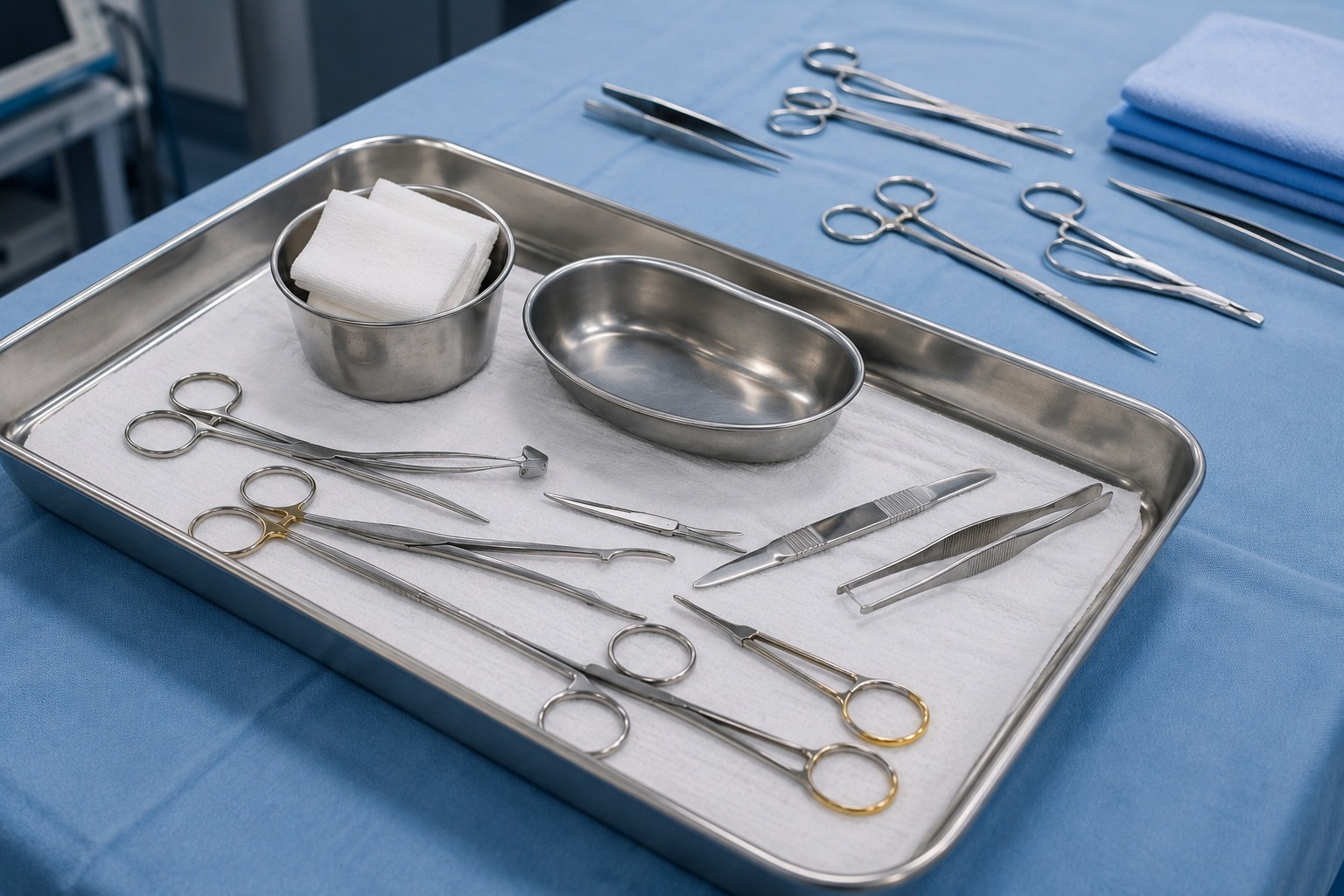
Medical Nonwovens in 2026: What Global Healthcare Buyers Should Prioritise
Learn what global healthcare buyers should prioritise when sourcing medical spunlace nonwovens in 2026. Explore key performance factors, supplier qualification criteria, compliance requirements, and how the right substrate supports wound care, surgical disposables, and other medical applications.
-
Recent Post
-
Why Fibre Ratio Can Change Nonwoven Performance Even When GSM Remains Constant
A buyer lines up two spunlace samples. Both are 50 GSM and the price per square metre is close.A buy
20.06.2026
Read Article -
What Should Be Validated Before Moving From a Nonwoven Trial to Commercial Production?
A trial run that performs well doesn't automatically mean you're ready to commit commercial volume.
14.10.2026
Read Article -
Best GSM For Wet Wipes A Procurement Guide for Choosing the Right Spunlace Fabric
Getting the GSM wrong is one of the most common and most expensive mistakes in wet wipes sourcing.
20.06.2026
Read Article -
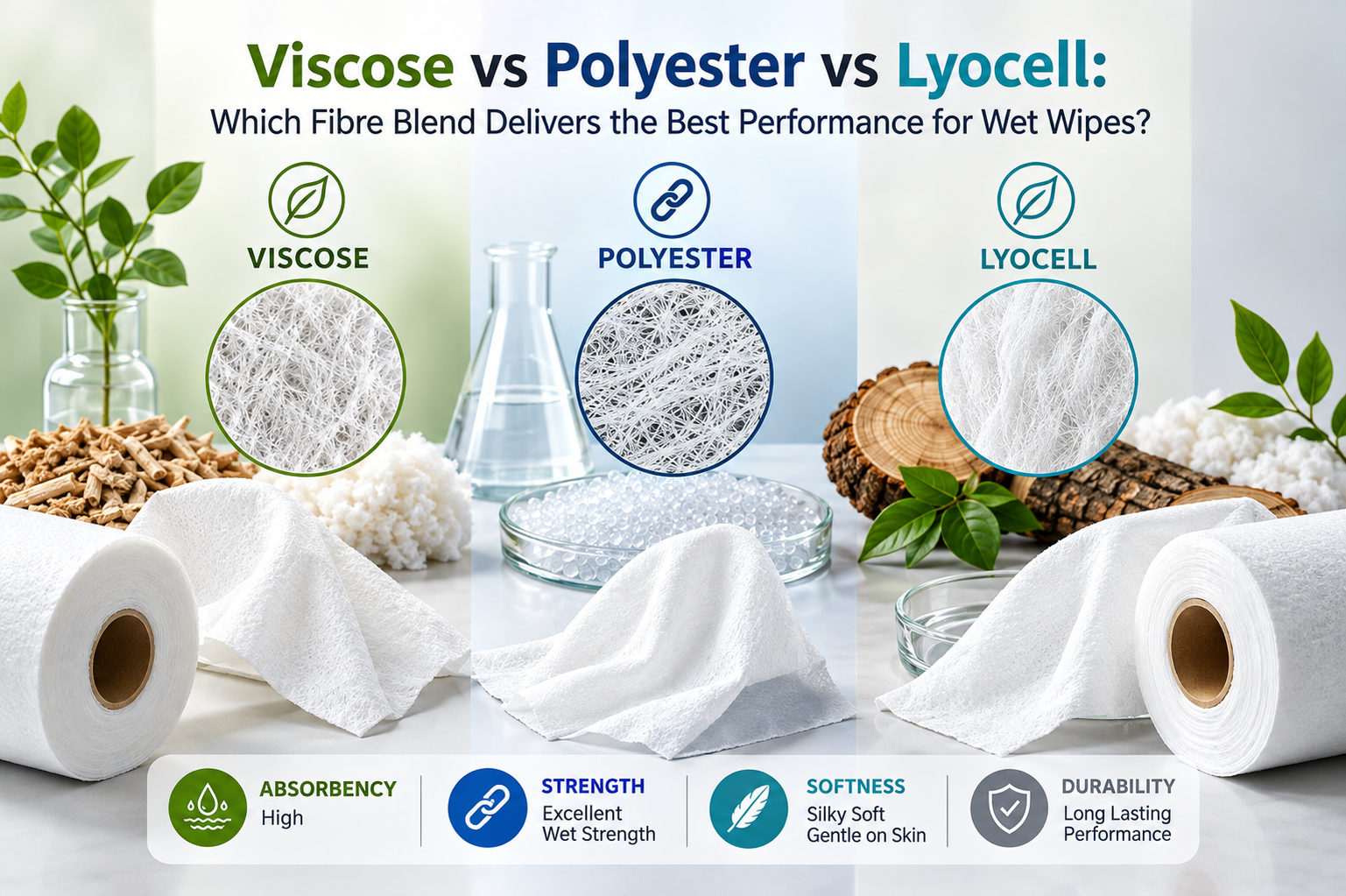
Viscose vs Polyester vs Lyocell: Which Fibre Blend Delivers the Best Performance for Wet Wipes?
Choosing between viscose, polyester, and Lyocell isn't really about picking a "best" fibre. It's abo
22.06.2026
Read Article -
How to Choose the Right Spunlace Nonwoven Fabric Manufacturer for Your Business
Sourcing decisions in the nonwoven category rarely fail because of price. They fail because a buyer
15.09.2026
Read Article -
How Global Wet Wipe Brands Evaluate Nonwoven Fabric Suppliers Before Signing a Contract
Multinational wet wipe brands don't sign with a nonwoven fabric supplier off a single sample and a g
08.09.2026
Read Article - View All Blogs
-
Need nonwoven solutions for your application?
Talk to our team about custom fabrics, sustainability, and product development tailored to your industry.
Frequently Asked Questions
Know everything — be it our products, our process, or why nonwovens are so cool.
What are Spunlace Nonwovens used for in the medical industry?
Spunlace Nonwovens are used in wound dressings, medical wipes, absorbent pads, incontinence products, and other healthcare disposables. They offer high absorbency, low linting, softness, and durability, making them suitable for sterile medical applications.
What should healthcare buyers consider when sourcing medical spunlace nonwoven materials?
Healthcare buyers should evaluate absorbency, tensile strength, low-lint performance, biocompatibility, batch consistency, compliance documentation, and the supplier's manufacturing capabilities before selecting a medical spunlace nonwoven.
What materials are commonly used to manufacture medical Spunlace Nonwovens?
Medical Spunlace Nonwovens are commonly manufactured using 100% viscose, polyester-viscose blends, or pulp-polyester combinations. The material is selected based on the required absorbency, strength, softness, and end-use application.
Why is supplier qualification important when purchasing medical Spunlace Nonwovens?
A qualified supplier provides consistent product quality, regulatory documentation, technical expertise, traceability, and custom development support. This helps healthcare manufacturers maintain compliance and reduce production risks
Explore Recent Blogs
Why Fibre Ratio Can Change Nonwoven Performance Even When GSM Remains Constant
A buyer lines up two spunlace samples. Both are 50 GSM and the price per square metre is close.A buy
Read More
What Should Be Validated Before Moving From a Nonwoven Trial to Commercial Production?
A trial run that performs well doesn't automatically mean you're ready to commit commercial volume.
Read More
Best GSM For Wet Wipes A Procurement Guide for Choosing the Right Spunlace Fabric
Getting the GSM wrong is one of the most common and most expensive mistakes in wet wipes sourcing.
Read More
Viscose vs Polyester vs Lyocell: Which Fibre Blend Delivers the Best Performance for Wet Wipes?
Choosing between viscose, polyester, and Lyocell isn't really about picking a "best" fibre. It's abo
Read More

Weave Your Success with Our Revolutionary Fabrics
Power your business with Elixrr's cutting-edge nonwoven fabric solutions. Eco-friendly, customizable, and engineered for excellence—because innovation starts with the right foundation.

Healthcare procurement has one rule that overrides everything else: the substrate must work. In wound care, surgical disposables, hygiene products, and clinical cleaning, the nonwoven fabric is not a component; it is the product. When it fails, the consequences are clinical. They affect patients, regulatory standing of the healthcare facility, and the reputation of every brand in the supply chain.
This is what separates medical nonwoven sourcing from every other nonwoven category. The margin for error is minimal. And yet brands looking for medical nonwovens use the same framework as commercial wipes of comparing GSM and checking price while overlooking the most critical characteristic: performance.
Key Takeaways
Where Medical Nonwovens Are Actually Used
The application range of medical nonwovens is wider than procurement teams often expect. Wound care spans sterile dressings, gauze replacements, and absorbent pads. Each has different absorbency, linting, and skin-contact requirements. Surgical disposables include gowns, drapes, and underpad materials, where liquid repellence and tensile strength are the most important criteria. Medical wipes feature at the intersection of clinical and near-clinical performance. Incontinence and hygiene products add skin-sensitivity requirements that do not apply to surface-cleaning substrates.
A substrate specified correctly for one application will not automatically transfer to another. Buyers who treat medical nonwovens as a single category discover this mistake during production trials.
What Healthcare Procurement Prioritises
Sterile nonwoven specifications differ from those of commercial wipes in several important ways. Procurement teams should focus on these five performance areas:
AbsorvSpun™: Built for Sterile Environments
The global medical nonwoven market stood at USD 18.61 billion in 2024, with sterile products accounting for over 60% of the disposables segment. The manufacturers qualifying long-term substrate partners now are building defensible supply chains. Elixrr's AbsorvSpun™ is designed for buyers in that qualification process.
It is not a commercial substrate adapted for clinical use. It is engineered according to specifications for sterile environments. The construction is highly absorbent, low-linting and doesn’t fail under fluid load. Liquid-repellent variants are available for surgical gowns and drapes.
Biocompatible composition options of 100% Viscose, Pulp + Polyester, and Polyester + Viscose give OEMs flexibility to match the substrate to their applications. The GSM range is 45–120. Surface treatment customisations such as Hydro Embossed, Dyed, Coated, and Apertured are possible for your specifications.
AbsorvSpun™ is currently supplying wound care, surgical disposables, and medical dressings manufacturers. For buyers with proprietary specifications, we encourage custom development partnerships, so that Elixrr works as a substrate development partner for you, not simply a roll supplier fulfilling a commodity brief.
How Pulp-Based Spunlace Supports Healthcare Applications
Pulp-based spunlace has advantages for medical applications. It absorbs liquids quickly. Retain them without leaking. The natural fibers in pulp-based spunlace reduce skin irritation compared to heavy blends. Pulp-based spunlace is also biodegradable, which is important to hospitals that are trying to reduce waste and their carbon footprint. It can be converted efficiently on high-speed lines used for surgical gowns, dressings and disposable formats.
For manufacturers, pulp-based substrates show a commitment to quality. Today, in Germany, 13,500 medtech manufacturers generate EUR 55 billion in revenues, with more than two-thirds of that turnover coming from international markets. For healthcare manufacturers in Europe, biodegradability and responsible sourcing are quickly becoming a procurement policy. Pulp-based nonwovens address both the performance requirement and the sustainability expectation in a single specification.
What to Ask a Supplier Before You Specify
The qualification questions for a medical nonwoven supplier are specific. Go through these before you finalise a substrate:
In a sterile medical supply chain, the documentation is as much a part of the product as the substrate itself.
The Bottom Line
Sourcing medical nonwovens is not a simple transaction. It is a partnership with a manufacturer who understands performance, compliance and the specific requirements of the healthcare industry. The suppliers worth working with will answer your technical questions clearly, produce documentation without delay, and understand what the substrate is doing inside the finished product. That is what a development partner looks like.
The qualification window for H2 supply is open now.
Request AbsorvSpun™ specifications or discuss custom development requirements at elixrrnonwovens.com/products. To start a sourcing conversation, speak to the team.